How to Choose the Right Deer Feeder Timer
Feed Time Control
Look for timers that allow adjustable run times. More control means better feed distribution.
Number of Feed Cycles
Higher-quality timers allow multiple feed times per day for better patterning.
Voltage Compatibility
Make sure the timer works with your feeder system (6V or 12V).
Reliability
The most important factor. A timer that fails means missed feeding cycles.
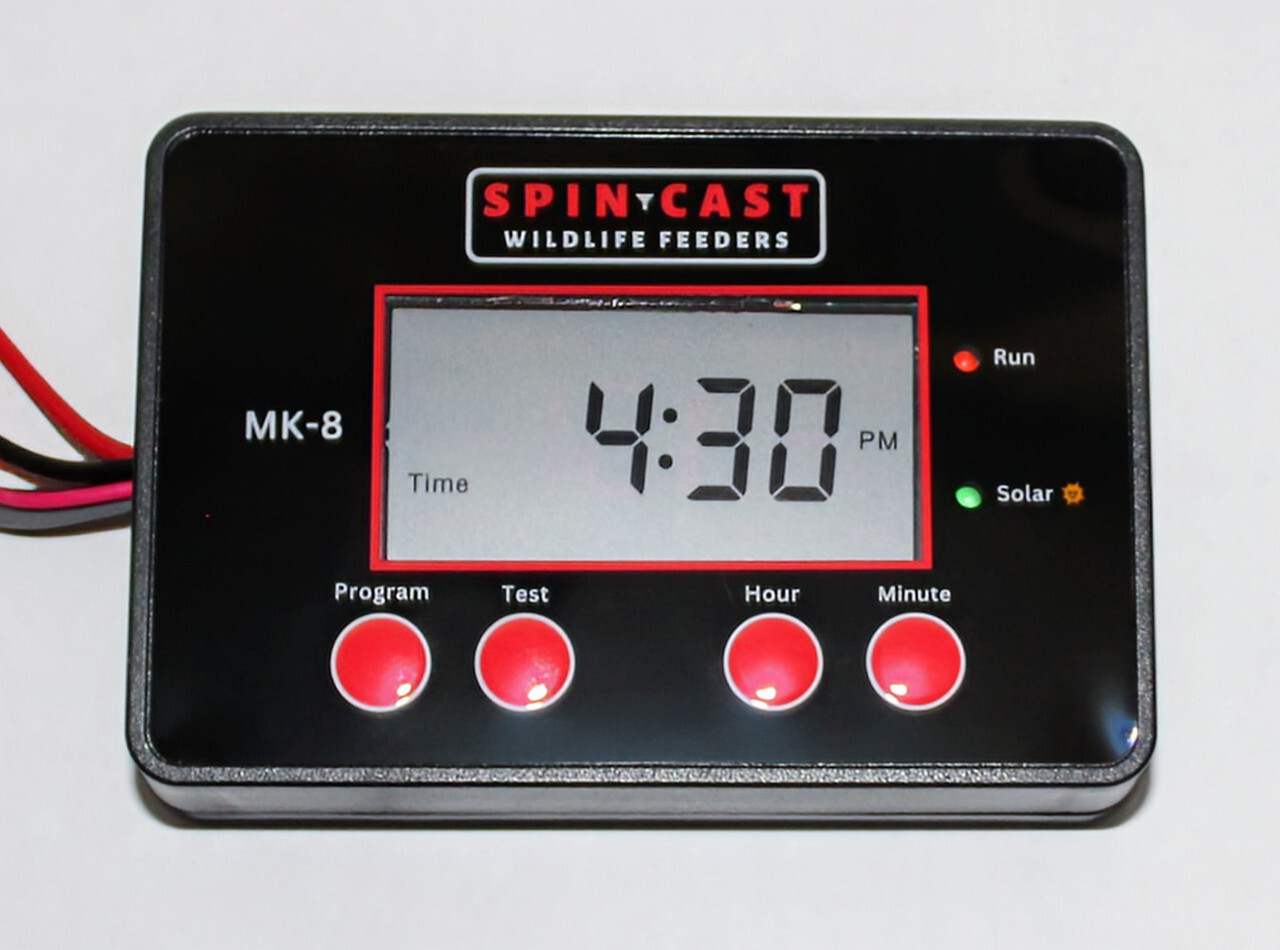
What Makes Spin-Cast Timers Different
Most low-cost feeder timers:
- Offer fewer feed times
- Have limited run duration
- Lose time accuracy over time
Spin-Cast timers are designed for:
- Consistent, accurate timing
- Longer run durations (up to 60 seconds)
- Reliable operation in outdoor conditions
Recommended Setup
- High-torque feeder motor
- Properly sized battery (6V or 12V)
- Solar panel for extended runtime
A properly matched system improves consistency and reduces maintenance.
What Affects Deer Feeder Timer Performance?
Feeder timer performance depends on several key factors:
- Battery size and condition – Undersized or weak batteries are the most common cause of feeder issues.
- Motor load – Higher torque motors require more power during operation.
- Run duration – Longer feed times increase power demand.
- Environmental conditions – Heat, moisture, and dust can affect electronics over time.
Using the correct battery and maintaining your feeder system ensures consistent operation and reduces failures in the field.
Deer Feeder Timers Built for Reliability
A dependable deer feeder timer is one of the most important parts of any feeder system. It directly controls feeding schedules and plays a key role in maintaining consistent wildlife patterns.
Spin-Cast timers are designed to operate reliably in real-world conditions, helping reduce maintenance trips and prevent missed feed cycles.
Deer Feeder Timer FAQs
How long should a deer feeder run?
Most feeders run between 5–20 seconds, but higher-capacity setups may require longer durations.
Do I need a 6V or 12V timer?
It depends on your feeder system. Many modern timers support both.
Why does my feeder timer stop working?
Common causes include weak batteries, poor connections, or low-quality timers.
How many times per day should a feeder run?
Typically 1–3 times per day, depending on your feeding strategy.
Choosing the Best Deer Feeder Timer
The best deer feeder timer delivers consistent performance, accurate timing, and reliable operation over time. Whether you are running a 6V or 12V system, choosing a high-quality timer helps ensure your feeder operates correctly and reduces maintenance in the field.
High-quality timers provide better feed control, more consistent schedules, and improved long-term reliability compared to lower-cost alternatives.
Built for hunters who depend on their feeders working every day—not just when it’s convenient.